
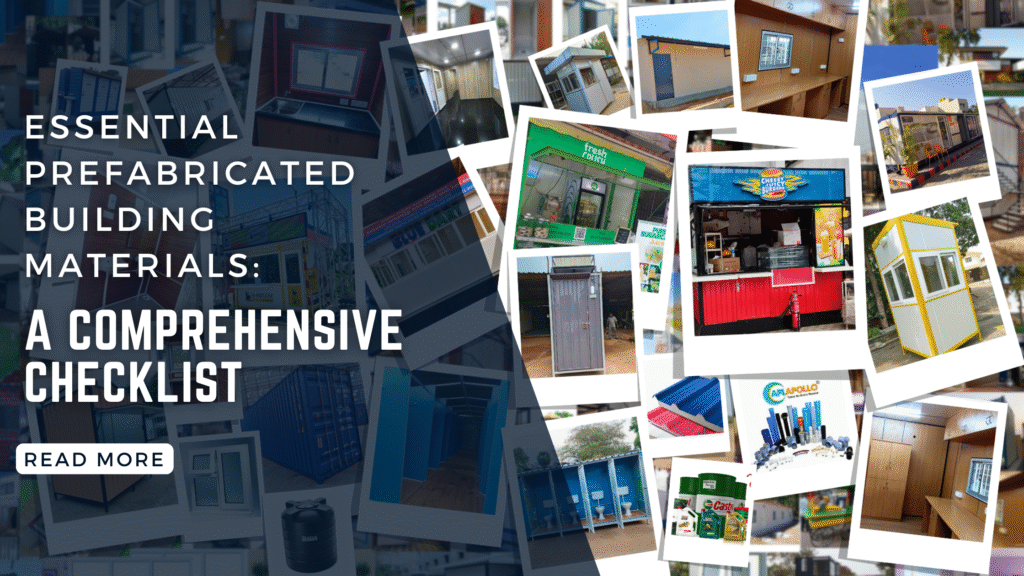
Thinking about buying a prefab cabin, cottage, or modular home? Great choice. But here’s the thing: not all prefab buildings are created equal. And the biggest factor separating a structure that lasts 30+ years from one that’s already falling apart after 10? The materials.
This isn’t just about what sounds good on a brochure. It’s about understanding what materials are going into your structure, why they matter, and what questions you should be asking before you commit.
This guide walks you through the essential materials that go into quality prefab buildings, what specifications actually matter, and a practical checklist you can use when evaluating different manufacturers.
The Foundation: Understanding Material Quality
Here’s a basic truth: prefab buildings are only as good as the materials used to build them.
Factory manufacturing means precision and consistency but only if quality materials are used from the start. Cheap materials cut corners on insulation, water resistance, or structural integrity. Premium materials cost more upfront, but they’re what separates a 50-year structure from a 10-year one.
The key materials in any prefab building include:
- Structural framework (steel, wood, or concrete)
- Wall panels and insulation
- Roofing materials
- Exterior cladding
- Windows and doors
- Flooring
- Interior finishes
- Electrical and plumbing components
Let’s break down what matters in each category.
1. Structural Framework: The Backbone
What it is: The frame that holds everything together.
Your options:
Steel Framework
- Grade: Look for galvanized or treated steel (rust-resistant). Quality manufacturers use grades like S320GD+Z or S350GD+Z to DIN standards.
- Thickness: Typically 1.5-3mm for wall frames
- Advantages: Extremely durable, pest-resistant, won’t rot, lasts decades, can be recycled
- Considerations: Requires proper rust protection through galvanizing or coating
- What to ask: “What grade of steel do you use?” and “Is it galvanized?”
Wood Framework
- Type: Look for pressure-treated wood or sustainably harvested timber
- Advantages: Natural insulation value, easier to customize, traditional feel, renewable resource
- Considerations: Requires regular maintenance, vulnerable to pests and rot if not properly treated
- What to ask: “Is your wood pressure-treated?” and “What’s the treatment standard?”
Concrete Framework
- Grade: Quality concrete is C40 or higher (compressive strength measure)
- Reinforcement: Should have proper steel reinforcement with minimum 25mm cover
- Advantages: Extremely durable, fire-resistant, strong
- Considerations: Heavier (impacts transportation and foundation), not suitable for all climates
- What to ask: “What’s your concrete grade?” and “What reinforcement specifications do you use?”
2. Wall Panels and Insulation: The Climate Control
This is crucial. Insulation quality directly impacts comfort, energy costs, and long-term durability.
Insulation Materials
Polyurethane (PUR) / Polyisocyanurate (PIR)
- R-value: R-6 to R-7 per inch (highest efficiency)
- Advantages: Best thermal performance, moisture-resistant, lightweight
- Thickness typically used: 40-100mm
- Cost: Premium but worth it for energy efficiency
Expanded Polystyrene (EPS)
- R-value: R-3.8 to R-4.4 per inch
- Advantages: Good efficiency, recyclable, cost-effective
- Thickness typically used: 50-100mm
- Cost: Mid-range
Rock Wool / Mineral Wool
- R-value: R-3.2 to R-3.8 per inch
- Advantages: Fire-resistant, soundproofing, moisture-tolerant
- Thickness typically used: 50-150mm
- Cost: Mid-range
Spray Foam
- R-value: R-6 to R-8 per inch (closed-cell)
- Advantages: Fills all gaps, excellent air-sealing, moisture-resistant
- Cost: Higher but exceptional performance
What To Look For
Wall thickness: Look for 50-100mm walls (outer + insulation + inner). Anything less is cutting corners.
Vapor barrier: Essential to prevent moisture problems. Should be polyethylene or specialized membranes that prevent moisture infiltration while allowing vapor transmission.
Density: Higher density insulation performs better. Ask about density specifications (measured in kg/m³).
Questions To Ask
- “What insulation material do you use?”
- “What’s the R-value or thickness of insulation in walls, ceiling, and floor?”
- “Do you use vapor barriers, and what type?”
- “Can I see wall cross-section specifications?”
3. Roofing: Your Weather Shield
The roof is your primary defense against elements. This matters enormously.
Roofing Materials
Metal Roofing
- Lifespan: 40-50+ years
- Advantages: Extremely durable, efficient water shedding, low maintenance, reflective (helps with cooling)
- Quality indicators: Minimum 26-gauge thickness, galvanized or Galvalume coating
- Cost: Mid to high
Asphalt Shingles
- Lifespan: 15-20 years
- Advantages: Cost-effective, common, adequate for many climates
- Quality indicators: 25-30 year warrantied shingles (not 10-year budget versions)
- Cost: Budget-friendly
Membrane Roofing (TPO, PVC, FPO)
- Lifespan: 20-30 years
- Advantages: Excellent for flat roofs, single-ply coverage, heat-welded seams
- Quality indicators: Look for reinforced membranes (not single-ply without backing)
- Cost: Mid-range
Wood Shingles
- Lifespan: 20-40 years (depending on climate and maintenance)
- Advantages: Natural aesthetic, good insulation properties
- Quality indicators: Hand-split vs machine-cut; grade 1 is highest quality
- Cost: Higher
Roof Structure
Decking: Should be solid (plywood or OSB minimum 7/16″ thickness) or metal decking. Avoid thin budget options.
Underlayment: Absolutely essential. Look for synthetic underlayment (better than felt). Should have high water resistance.
Ventilation: Proper roof ventilation prevents moisture buildup and extends roof life.
Questions To Ask
- “What roofing material do you use?”
- “What’s the expected lifespan?”
- “What warranty do you provide on the roof?”
- “Is the roof decking solid or trusses?”
- “What underlayment do you use?”
4. Exterior Cladding: The Face Your Building Shows
Cladding protects against weather and creates the aesthetic.
Cladding Options
Metal Siding
- Durability: 40+ years
- Advantages: Extremely durable, low maintenance, many colors available, won’t rot or attract pests
- Cost: Mid-range
- Considerations: Can dent, requires proper installation to prevent water infiltration
Wood Siding
- Durability: 20-40 years (depends on climate and maintenance)
- Advantages: Natural aesthetic, renewable, good insulation
- Quality: Look for pressure-treated or naturally rot-resistant species
- Cost: Higher
- Considerations: Requires regular maintenance (staining, sealing)
Fiber Cement
- Durability: 25-30+ years
- Advantages: Won’t rot, won’t attract pests, paintable, moderate cost
- Cost: Mid-range
- Considerations: Heavier than other options, requires proper installation
Composite/LP SmartPanel
- Durability: 15-20 years
- Advantages: Cost-effective, easier to install, various looks available
- Cost: Budget-friendly
- Considerations: Not as durable as premium options, may need replacement eventually
Brick or Stone Veneer
- Durability: 50+ years
- Advantages: Classic, extremely durable, minimal maintenance
- Cost: Higher
- Considerations: Heavier (impacts foundation and transportation), requires proper installation
Critical Details
House wrap: Absolutely essential. Quality house wrap (not just plastic sheeting) prevents water infiltration while allowing vapor transmission. Common products: Tyvek or equivalent.
Flashing: Metal flashing around windows, doors, and roof penetrations. Critical for preventing leaks. Should be stainless steel or copper (not aluminum which corrodes).
Sealing: All penetrations should be sealed properly. Poor sealing = future moisture problems.
Questions To Ask
- “What cladding material do you use?”
- “Is house wrap included?”
- “What type of flashing and sealing do you use?”
- “How do you protect window and door areas from water infiltration?”
5. Windows and Doors: The Openings That Matter
Windows and doors are major factors in energy efficiency and weather protection.
Window Specifications
Frame Material:
- Vinyl: Budget-friendly, good insulation, low maintenance
- Wood: Traditional, good insulation, requires maintenance
- Aluminum: Strong but poor insulation (avoid single-pane aluminum)
- Fiberglass: Excellent durability and insulation, higher cost
Glass Specifications:
- Single-pane: Budget option, poor insulation (avoid if you care about comfort)
- Double-pane: Standard for quality buildings, R-value ~2
- Triple-pane: Premium, better insulation, R-value ~3+
- Low-emissivity (Low-E) coating: Reflects heat, improves efficiency—definitely worth it
Installation Quality: Proper window installation is critical. Poor installation causes leaks regardless of window quality.
Door Specifications
Exterior Doors:
- Material: Steel (durable), fiberglass (good insulation, durable), or solid wood (traditional but requires maintenance)
- Insulation value: Should have similar U-value to windows
- Weatherstripping: Absolutely essential. Should be high-quality, upgradeable
Questions To Ask
- “Are windows double or triple-pane?”
- “Do you use Low-E coatings?”
- “What material are frames?”
- “How are windows sealed and flashed?”
- “What’s the installation process to prevent leaks?”
6. Flooring: What You Walk On
Flooring affects both comfort and durability.
Structural Flooring
Sub-flooring Options:
- Plywood: Standard, 3/4″ minimum (not cheaper thinner options)
- Engineered flooring: Good moisture resistance, stable
- Joists: Should be 16″ on center (not 24″ which is under-spec)
Insulation Under Floor:
- R-value: Should be R-15 to R-25 depending on climate
- Types: EPS, fiberglass, or spray foam
- Vapor barrier: Essential to prevent moisture from below
Finished Flooring
Laminate: Budget option, 12mm minimum thickness, waterproof options available
Vinyl/LVP: Durable, waterproof, cost-effective, easy maintenance
Wood: Natural aesthetic, warmer feel, higher cost, requires maintenance
Tile: Durable, cool to touch, higher cost
Concrete: Industrial aesthetic, very durable, can be sealed and polished
Questions To Ask
- “What’s your sub-flooring material and thickness?”
- “What insulation is under the floor, and what’s the R-value?”
- “What finished flooring options are available?”
- “How is moisture from below prevented?”
7. Interior Finishes: The Details
These don’t affect durability as much as exterior materials, but matter for comfort and maintenance.
Wall Finishes
Drywall/Gypsum Board:
- Standard 5/8″ thickness (not cheaper 1/2″ options)
- Moisture-resistant in wet areas
- Finished with paint or other surfaces
Cement Board:
- Used in wet areas (bathrooms, kitchens)
- More moisture-resistant than drywall
- Required for tile backing
Paints and Coatings
Look for high-quality paints (not budget paint) with:
- Good coverage
- Durability in high-use areas
- Moisture resistance in bathrooms/kitchens
8. Electrical and Plumbing: The Systems
These aren’t visible, but they’re critical.
Electrical
- Wiring: Copper (superior), not aluminum
- Capacity: Adequate for modern needs (not under-spec)
- Installation: Should follow local electrical codes
- Protection: Proper grounding and GFI protection in wet areas
Plumbing
- Piping: PEX, copper, or high-quality plastic (not cheap plastic)
- Installation: Properly supported and accessible
- Shut-off: Main water shut-off easily accessible
Questions To Ask
- “Does a licensed electrician install electrical systems to current code?”
- “What’s the wire gauge and panel capacity?”
- “What plumbing material do you use?”
- “Are systems properly supported and accessible?”
The Material Quality Checklist
Use this checklist when evaluating manufacturers:
Framework
- Steel: Galvanized/treated grade specified (S320GD+Z or better)
- Wood: Pressure-treated with treatment standard specified
- Concrete: Grade C40 or higher with proper reinforcement
Insulation
- Wall thickness: 50-100mm minimum
- R-value specified for walls, ceiling, floor
- Vapor barrier included and specified
- Density specifications provided
Roof
- Material specified (metal, shingle, membrane)
- Quality underlayment specified
- Warranty on roofing system provided
- Proper ventilation designed in
Exterior
- Cladding material specified
- House wrap included
- Flashing material specified (stainless steel or copper)
- Sealed and protected penetrations
Windows/Doors
- Double or triple-pane specified
- Low-E coating included
- Frame material specified
- Installation method and sealing described
Flooring
- Sub-floor material and thickness specified
- Floor insulation R-value specified
- Moisture barriers included
- Finished flooring options described
Systems
- Electrical: Code compliance, licensed electrician
- Plumbing: Material and support method specified
- HVAC: Capacity for building size specified
Questions To Ask Every Manufacturer
- “Can you provide written specifications of all materials?” (Not just verbal—get it in writing)
- “What’s your insulation R-value for walls, ceiling, and floor?” (Specific numbers, not vague “high quality”)
- “Is your electrical installed by a licensed electrician to local codes?”
- “What’s your warranty on structural components, roofing, and systems?” (How long?)
- “Can you show me wall cross-sections and construction details?” (Visual clarity matters)
- “What’s your quality control process?” (How do they ensure materials meet specifications?)
- “Can I see examples of buildings you’ve constructed 5+ years ago?” (Real-world durability proof)
- “Which materials are premium vs budget options?” (Transparency about cost differences)
What “Premium” Actually Means
Don’t confuse expensive with quality. But understand:
- Thicker insulation = better comfort and lower energy bills
- Quality vapor barriers = no moisture problems later
- Galvanized steel = no rust after 30 years
- Low-E windows = significant energy savings
- Proper sealing and flashing = no leaks
These aren’t luxury upgrades. They’re the difference between a building that thrives and one that deteriorates.
The Bottom Line
Great prefab buildings aren’t accidents. They result from careful material selection, proper specifications, and quality manufacturing.
When you see two manufacturers quoting similar prices, the difference is almost always materials. One is using quality materials with proper specifications. The other is cutting corners.
Your job: ask detailed questions, get everything in writing, and understand what’s actually going into your building.
Alpha Enterprises Chennai uses premium materials with documented specifications in all our prefab buildings. We believe you should know exactly what you’re getting—not just marketing claims, but actual material specifications, R-values, grades, and warranties.
When you’re ready to build, you deserve to understand materials completely.
Ready to Understand Your Building Materials?
When you’re evaluating prefab manufacturers, use this checklist. Ask tough questions. Get written specifications. Understand exactly what materials are going into your building.
Contact Alpha Enterprises Chennai:
- Get detailed material specifications in writing
- Compare material quality across options
- Understand the “why” behind our material choices
- See real examples of durability in completed buildings
- Build with confidence knowing exactly what you’re getting
Your prefab building deserves quality materials. Let’s make sure you get them.