
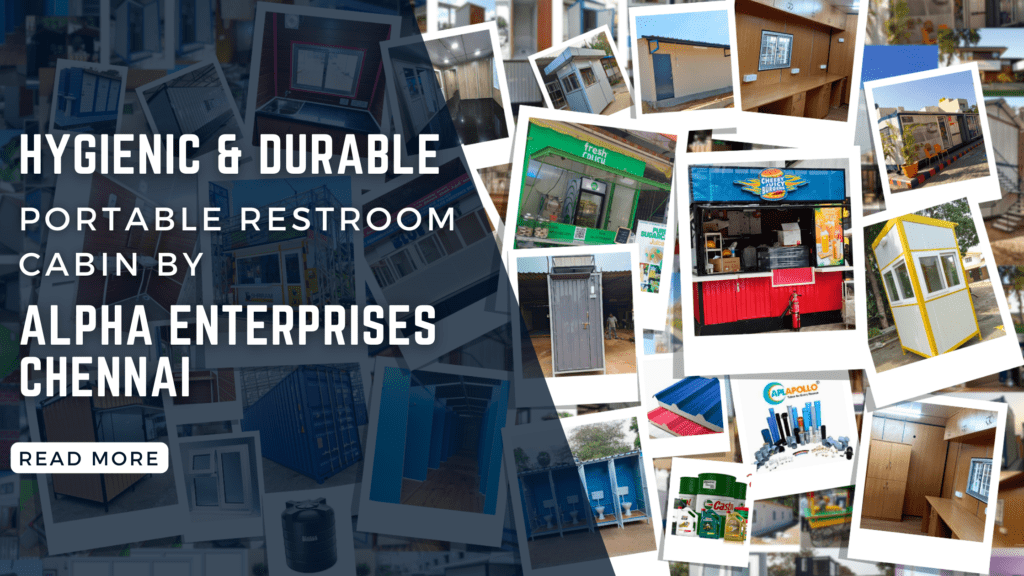
The landscape of urban development and event management is shifting rapidly. Whether it’s a high-rise construction project in the heart of OMR or a massive outdoor cultural festival on ECR, one fundamental necessity often dictates the success and comfort of the project: sanitation. Providing clean, private, and robust sanitation facilities is no longer just a regulatory requirement; it is a commitment to dignity and health. This is where the engineering excellence of a portable restroom cabin becomes indispensable.
The Evolution of Portable Sanitation
Gone are the days when portable toilets were synonymous with cramped, unpleasant plastic boxes. Modern engineering has transformed these units into sophisticated “restroom cabins.” Today, durability and hygiene are the two pillars of design. In a humid coastal city like Chennai, where equipment is subjected to salt air, intense heat, and heavy monsoons, the standard for “durable” is set much higher than elsewhere.
Why Durability Matters: Built for the Chennai Climate
When we talk about durability in the context of a restroom cabin, we are talking about material science. A cabin must withstand:
- Corrosion Resistance: The coastal air in Chennai is rich in moisture and salt. Standard metal structures rust within months. High-quality portable cabins utilize treated materials or high-grade polymers that remain unaffected by oxidation.
- Structural Integrity: These units are often moved from one site to another. A durable cabin must have a reinforced frame that can be craned or forklifted repeatedly without warping or cracking.
- Thermal Insulation: With temperatures often soaring above 40°C, a thin-walled cabin can become an oven. Quality portable restrooms incorporate insulated panels to maintain a bearable internal temperature.
Hygiene: The Non-Negotiable Standard
In a post-pandemic world, hygiene is the primary concern for users. A portable restroom cabin is only as good as its ease of maintenance.
- Non-Porous Surfaces: By using materials that don’t absorb odors or bacteria, the interiors can be deep-cleaned in minutes.
- Advanced Ventilation: Proper airflow is critical. Modern cabins feature strategic louver designs that allow for constant air exchange while maintaining total privacy.
- Hands-Free Options: Integration of foot-operated flushes and sinks helps minimize touchpoints, drastically reducing the spread of germs.
Versatile Applications Across Industries
The beauty of a portable restroom cabin lies in its versatility. It is a plug-and-play solution for various sectors:
1. Construction and Infrastructure
Construction workers spend long hours in demanding environments. Providing a hygienic restroom cabin on-site improves morale and ensures compliance with labor welfare laws. These units can be moved as the project progresses—from the foundation stage to the final finishing levels.
2. Event Management
From outdoor weddings to corporate marathons, guests expect the same level of cleanliness they would find in a luxury hotel. Modular restroom cabins can be outfitted with premium fittings, mirrors, and lighting to cater to high-end events.
3. Public Spaces and Parks
As cities strive to become “Smart Cities,” the installation of durable public toilets is a priority. Portable cabins offer a cost-effective alternative to permanent brick-and-mortar structures, which require lengthy permits and high construction costs.
4. Disaster Relief and Remote Worksites
In times of crisis or for industries like mining and oil exploration, these cabins provide an immediate sanitation solution that can be deployed via truck in a matter of hours.
The Economics of Choosing Quality
While it might be tempting to opt for the cheapest available unit, the “total cost of ownership” tells a different story. A low-quality portable toilet requires frequent repairs, suffers from foul odors that deter users, and often needs replacement within a year.
Investing in a durable restroom cabin means:
- Lower maintenance costs.
- Longer lifespan (often 10+ years).
- Better resale or rental value.
- Zero downtime due to structural failures.
Key Features to Look For
If you are currently scouting for a sanitation solution, ensure your portable restroom cabin includes:
- High-Density Polyethylene (HDPE) or Glass Reinforced Plastic (GRP) walls.
- Anti-skid flooring to prevent accidents in wet conditions.
- Translucent roofing to allow natural light during the day, saving on electricity.
- Robust locking mechanisms for user safety.
- Efficient waste management systems, whether they are self-contained tanks or direct-sewer connections.
Sustainability and the Environment
Modern portable cabins are designed with the planet in mind. Many models now feature water-saving flush systems that use significantly less water than traditional toilets. Furthermore, the materials used in high-end cabins are often recyclable, ensuring that the unit doesn’t end up in a landfill at the end of its long life.
Conclusion
Sanitation is the silent backbone of any successful project or event. By choosing a solution that prioritizes hygiene, user comfort, and structural longevity, you aren’t just buying a product—you are investing in health and efficiency.
Whether you are managing a massive infrastructure project or planning a high-profile public gathering, the right facilities make all the difference. For those seeking the gold standard in sanitation infrastructure, the most reliable and meticulously designed solutions are provided by Alpha Enterprises Chennai. Their commitment to quality ensures that every cabin delivered is a blend of rugged durability and impeccable hygiene.